Moving to a new country is the ultimate modern dream—a monumental chance to rewrite your future and build a legacy of success for yourself and your family. But let’s be entirely honest: once the initial excitement of arrival settles, managing your finances in a foreign system can quickly become a relentless, confusing, and often costly headache. The challenges are not theoretical; they are immediate. High transfer fees eat into your hard-earned savings, hidden banking costs surprise you every month, and the daunting struggle to build a credit score from absolutely zero can feel like an impossible puzzle. It is a system that often feels stacked against newcomers, punishing ignorance rather than rewarding effort.
At EJEFINANZAS, we are committed to breaking down these formidable barriers. We’ve done the heavy lifting, analyzing the current financial landscape in North America in 2026 to bring you the most efficient, safe, and sophisticated ways to protect and grow your dollars. This isn’t just about making money; it’s about navigating a new system with confidence and ensuring your effort truly counts towards your long-term goals.
🚀[DOWNLOAD YOUR EXPAT CHECKLIST PDF]
The Digital Banking Revolution: Why You Need a No-Fee Account Now
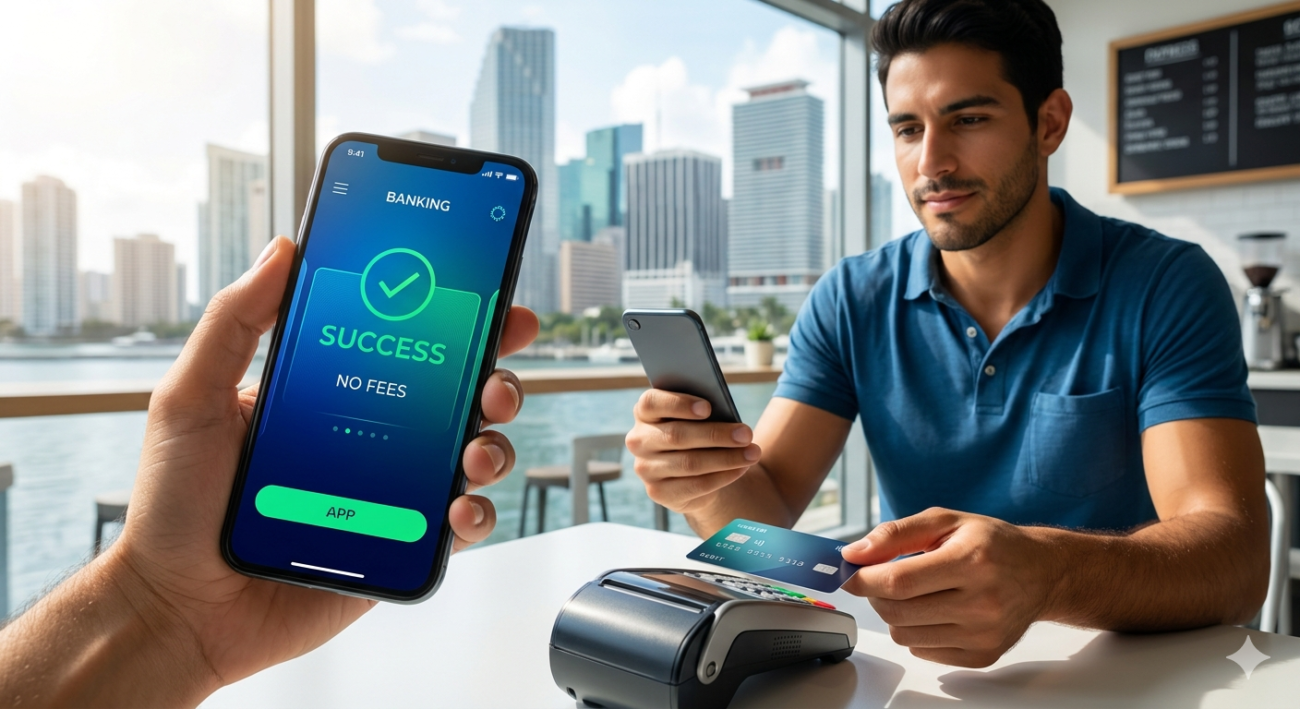
In 2026, there is absolutely no logical reason to pay a legacy bank a monthly maintenance fee just to have an account. The era of traditional institutions demanding high minimum balances just to waive a fee is rapidly fading. Digital-first platforms (often called neobanks) have completely changed the game, offering flexibility that traditional institutions simply cannot match, especially for newcomers whose income might not yet be stable. For those living in the USA and Canada, options like Chime, Revolut <18 (for families), or Neo Financial are not just alternatives; they are essential tools for survival and growth.
These platforms understand the modern expat experience and offer tailored benefits that make life significantly easier from day one:
- Zero monthly fees: Keep every single cent you earn.
- Early direct deposit: Get your paycheck up to two days faster, a vital feature for managing cash flow when you are first starting.
- Fee-free ATM networks: Access your cash across the entire country without being penalized by surcharge fees.
- Intuitive Apps: Manage your budget with visual tools that make understanding your spending habits effortless.
Remittances: Stop Giving Your Money Away in Hidden Fees
Sending money home to family is a non-negotiable priority for most expats. It is an act of love, responsibility, and commitment. However, using the wrong service can be a devastating and silent mistake. Many traditional wire transfers and old-school money transfer services aggressively hide their true costs, often charging you up to 7% in hidden exchange rate markups on top of their stated flat fees. Understanding the crucial difference between a visible flat fee and the invisible exchange rate spread is the most important financial lesson a newcomer can learn. Your goal is simple: maximize the amount that arrives in your loved one’s hands.
Quick Comparison of Top Transfer Platforms (2026 Real-Time Data)
| Platform | Avg. Transfer Fee Structure | Transfer Speed | Best Receiving Option | Newcomer Friendly? |
| Wise | Low, transparent percentage based | 1-2 Business Days | Direct Bank Deposit (Mid-to-large amounts) | Yes (Super easy setup) |
| Remitly | Variable (reception method based) | Instant to Minutes | Cash Pickup / Digital Wallet (Small, fast transfers) | Very (Often has promotional rates) |
| Western Digital | Moderate flat fee + moderate spread | Minutes to Hours | Cash Pickup (Remote or unbanked areas) | Yes (Widely known) |
| Traditional Bank Wire | High flat fee + 3-5% spread | 3-5 Business Days | Bank Deposit (Complex, high-value business transfers) | No (Requires complex SWIFT details) |
Building Your Credit Score: The Fast Track to North American Stability
In North America (both the USA and Canada), your Credit Score is far more than just a arbitrary number; it is your fundamental financial reputation. It determines where you can legally live, what interest rate you will pay for a car loan, and even directly affects your ability to get certain jobs in the finance or security sectors. The paradox is cruel: you need credit history to get credit, which leaves newcomers stuck in a chicken-and-egg dilemma. If you are starting at zero, you cannot afford to wait. You must be proactive from your first month.
Here is the strategic, proven 2-step approach to building a robust credit score quickly and safely, even with zero initial history:
🚀[DOWNLOAD YOUR EXPAT CHECKLIST PDF]
1. Secured Credit Cards: The Golden Entry Point
A secured card is the definitive first step. Unlike a standard card, a secured credit card requires a cash security deposit that you provide upfront (e.g., $300). This deposit typically becomes your initial credit limit. The bank has zero risk because they already have your money if you fail to pay. By using this card for small, essential purchases like gas or groceries and paying it off in full and on time every month, you proactively prove to the major credit bureaus that you are a responsible borrower. After 6 to 12 months of perfect history, many banks will graduate you to an unsecured card and return your deposit.
2. Credit Builder Loans: Safe Payment History Generation
These are specialized, low-risk financial products designed solely to report positive payment history. When you are approved for a credit builder loan, you do not receive the money immediately. Instead, the «borrowed» amount is held securely in a locked savings account while you make small monthly payments (e.g., $25) over a fixed term. At the end of the term, you get the money back (minus minimal interest fees), and your credit report shows a perfect record of on-time payments. It is a safe way to add positive data to your file.

Tax Efficiency for Newcomers: Navigating the IRS and CRA in 2026
Understanding the intricate tax regulations—whether it’s the IRS in the USA or the CRA in Canada—is vital for your long-term financial health and legal standing. The rules are undeniably complex, and ignorance of the law is not a valid excuse. As an immigrant, your tax situation is often more complicated than a citizen’s. Did you know that certain remittances or financial support sent to dependents back home might have specific tax implications depending on your official residency status and the specific tax treaties in place between your new and old country?
Always keep meticulous digital records of all your income sources, bank transfers, and major expenses. This isn’t just about compliance; it’s about claiming deductions and credits you might be entitled to. In Canada, for instance, many immigrant-specific benefits exist, but you must know how to claim them. Consulting a certified expat tax professional during tax season is not an unnecessary expense; it is a vital investment that can save you thousands of dollars and ensure you are fully compliant with your new country’s laws.
The Psychological Hurdles of Financial Immigration
Transitioning to a new financial system is as much a psychological challenge as a technical one. Many newcomers experience a form of «culture shock» with money. In many Hispanic countries, cash is king, and debt is something to be avoided at all costs. In North America, the judicious use of debt is the key that unlocks major milestones like homeownership. This shift requires a mental reset. You are not just learning a new currency; you are learning a new philosophy of value. Recognizing this struggle is the first step to overcoming it.
Free Resource: The Expat Financial Checklist 2026 (Lead Magnet)
Navigating this journey alone is overwhelming. To support your transition, our expert team at EJEFINANZAS has created a comprehensive, easy-to-use checklist tailored for newcomers to the USA and Canada in 2026. This isn’t generic advice; it’s a step-by-step action plan to help you build stability from month one.
What is included in the «First 90 Days» Expat Checklist?
- Month 1: Foundation. A breakdown of exactly which ID you need for banking, how to secure your first no-fee account, and which transfer service to set up first.
- Month 2: Credit Initiation. A clear guide on how to choose your first secured card and exactly how much to spend on it to maximize your score growth.
- Month 3: Consolidation & Planning. Tips on how to audit your spending, understand your new payslip, and begin a simple tax preparation file.
Final Check: Are You Ready for North American Success?
Taking decisive control of your finances in a new country is an undeniable sign of strength, maturity, and long-term ambition. By choosing the right digital banking tools, maximizing your remittance efficiency, building your credit proactively from day one, and staying meticulously tax-compliant, you are laying an unshakable foundation of stability for years to come. The goal is to make your transition smooth, ensuring you are not constantly stressed about money so you can focus on what truly matters: achieving your personal, professional, and family goals.
The opportunity is monumental. Don’t let a hidden fee or a missed credit payment slow down your progress. Your success story starts with smart financial decisions today.